SwissChems: A Closer Look at Research Compound Quality and Documentation
Choosing a research compound is not simply about finding a product online. For laboratories, researchers, and professionals working with experimental materials, factors such as product identity, specifications, testing, documentation, and handling information can be just as important as the compound itself.
This is where SwissChems positions its online platform: as a source for research-oriented compounds accompanied by product information and laboratory documentation.
Rather than looking at a research supplier only through the size of its catalog, it can be more useful to examine how products are presented, what information is available, and what researchers should consider before evaluating an experimental compound.
A Research Catalog Built Around Different Compound Classes
Research compounds can belong to very different chemical and biological categories. A supplier serving this market may therefore carry materials intended for a wide range of experimental applications.
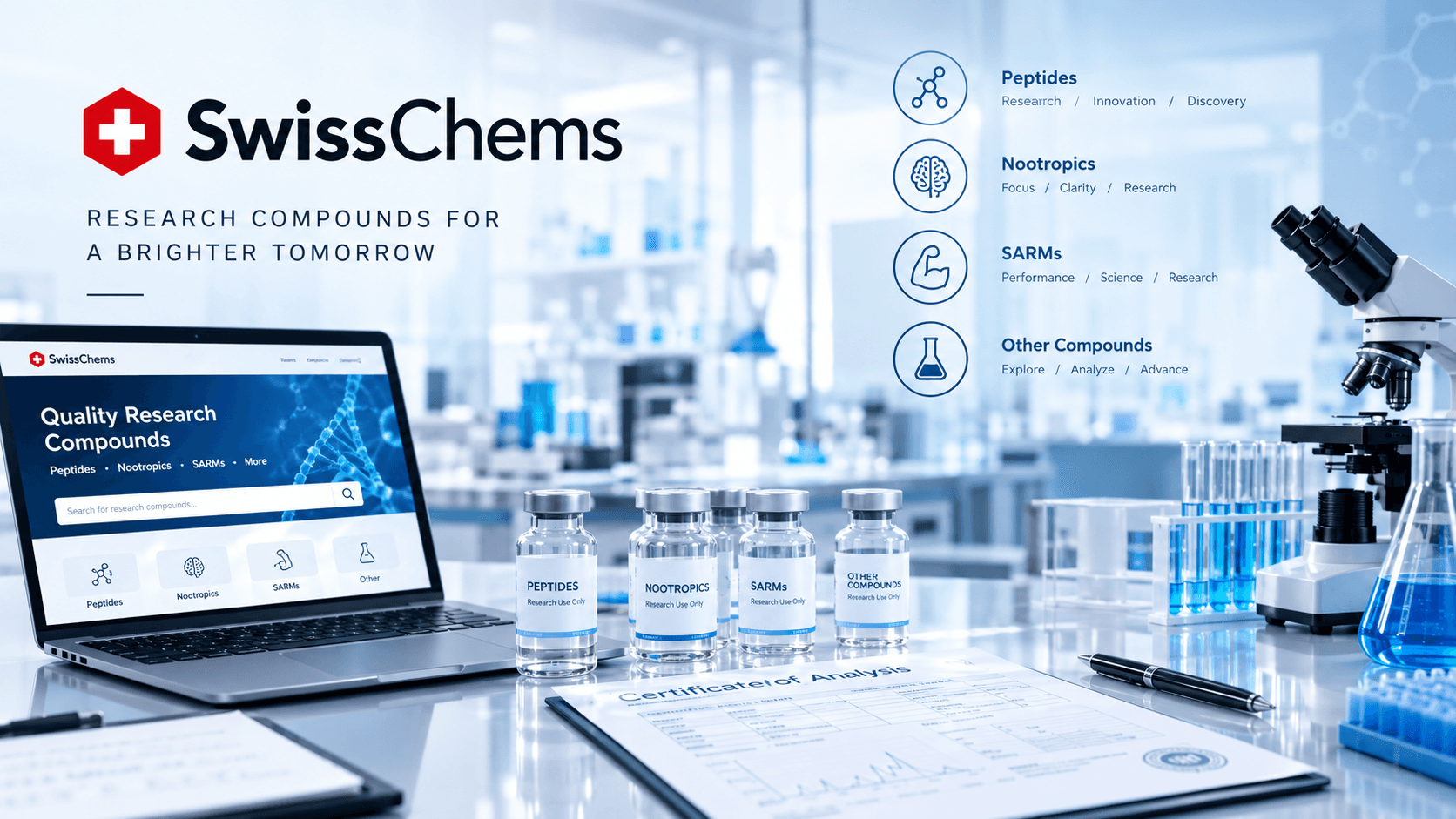
SwissChems' catalog includes products across areas such as peptides, nootropics, SARMs, and other research compounds. Individual product pages provide information such as compound properties, research descriptions, and testing-related details.
This type of organization allows researchers to investigate compounds according to their scientific area rather than having to search through an undifferentiated product list.
Why Product Documentation Matters
One of the most important parts of evaluating a research compound is understanding exactly what is being offered.
Useful documentation can include:
Compound name and synonyms
Chemical formula
Molecular weight
CAS information where applicable
Product quantity
Purity information
Storage or handling information
Laboratory testing documentation
Certificate of Analysis availability
For example, SwissChems product pages can include chemical and molecular information alongside research descriptions and laboratory-results sections.
For research professionals, having this information accessible before making a purchasing decision can make product comparison more straightforward.
Looking Beyond the Product Name
A compound's name alone does not provide enough information to evaluate a research material.
Two products may appear similar at first glance while differing in concentration, formulation, quantity, or analytical specifications. Researchers should therefore examine the complete product documentation rather than relying exclusively on a product title.
This is particularly relevant for specialized research compounds, where molecular identity and analytical characteristics can have a significant impact on experimental planning.
SwissChems and Laboratory Testing
Quality control is another important consideration when purchasing research materials.
SwissChems states on its product pages that its products undergo independent third-party laboratory testing for identity, purity, and potency. The site also provides access to Certificates of Analysis and laboratory-result information for applicable products.
For researchers, independent analytical documentation can provide an additional point of reference when evaluating whether a material is appropriate for a particular laboratory project.
Testing documentation should still be reviewed carefully. Researchers should consider the testing method, reported results, batch information, and the specific claims supported by the documentation.
Exploring Peptide Research Materials
Peptides represent one of the more specialized areas within experimental compound research.
Because peptides can have highly specific structures and biological targets, researchers may need detailed information about molecular identity, quantity, formulation, and analytical characteristics when planning laboratory work.
SwissChems provides peptide products alongside research descriptions and compound-specific information. Individual pages can also describe the scientific pathways and experimental areas associated with particular peptide compounds.
The appropriate research value of any individual peptide ultimately depends on the research question, experimental model, and available scientific evidence.
Nootropic Research Compounds
Another area represented in the SwissChems catalog is nootropic research.
Nootropic compounds are investigated across a variety of scientific contexts, including studies involving neurological signaling, receptor activity, neurotransmitter pathways, and related molecular mechanisms.
Rather than assuming that every compound has the same research profile, researchers should examine each material independently. Chemical identity, purity, available literature, and experimental evidence can vary considerably between compounds.
SwissChems' product information provides a starting point for examining individual materials and their stated research applications.
SARMs and Experimental Research
Selective androgen receptor modulators, commonly known as SARMs, form another category associated with experimental compound research.
Research involving these compounds can focus on receptor interactions, molecular signaling, pharmacological characteristics, and comparative studies.
However, researchers should distinguish between experimental research and approved medical use. A compound being available through a research catalog does not automatically mean that it has been approved as a medicine or established as safe for human use.
A Better Way to Evaluate Research Suppliers
When comparing research-compound suppliers, price should not be the only consideration.
A more useful evaluation framework can include several questions:
1. Is the compound clearly identified?
Look for chemical names, identifiers, molecular information, and other relevant specifications.
2. Is testing information available?
Check whether analytical testing is documented and whether batch-specific information or a Certificate of Analysis is available.
3. Is the intended use clearly stated?
Research products should have clear labeling regarding their intended purpose and applicable restrictions.
4. Is enough information provided for comparison?
Detailed product pages make it easier to compare compounds based on objective characteristics rather than marketing language alone.
5. Are regulatory requirements understood?
Research compounds can be subject to different rules depending on the country, jurisdiction, compound, and intended application.
Research Use Is Not the Same as Consumer Use
An important distinction should always be maintained between research materials and products approved for human consumption.
SwissChems' product pages state that the products are intended for research purposes and are not presented as drugs, food, or cosmetics. The site also states that bodily introduction into humans or animals is prohibited and that products should be handled by qualified professionals.
This distinction is important when reading product descriptions online. Scientific research information should not be interpreted as a recommendation for personal use or as evidence that a compound is medically approved.
What Makes a Research Catalog Useful?
A useful research catalog does more than display product names.
Researchers benefit when a supplier provides enough information to answer basic questions before purchasing:
What is the compound?
What are its documented properties?
How much material is supplied?
What testing information is available?
What research areas is it associated with?
What restrictions apply to the product?
SwissChems attempts to provide this type of information directly through its individual product pages, where available.
Final Thoughts
SwissChems is positioned as an online source for research-oriented compounds spanning multiple categories, including peptides, nootropics, SARMs, and other experimental materials.
For anyone evaluating a research supplier, the most important step is not simply finding a large catalog. It is understanding the documentation behind individual products, reviewing analytical information, considering the available scientific evidence, and making sure the intended use complies with applicable requirements.
SwissChems provides product-level research information and laboratory-testing details that can help visitors begin that evaluation process. As with any research material, individual compounds should be assessed on their own scientific and regulatory merits rather than broad claims about an entire product category.
Explore the SwissChems research catalog: https://swisschems.is/?ref=LARABETHELL